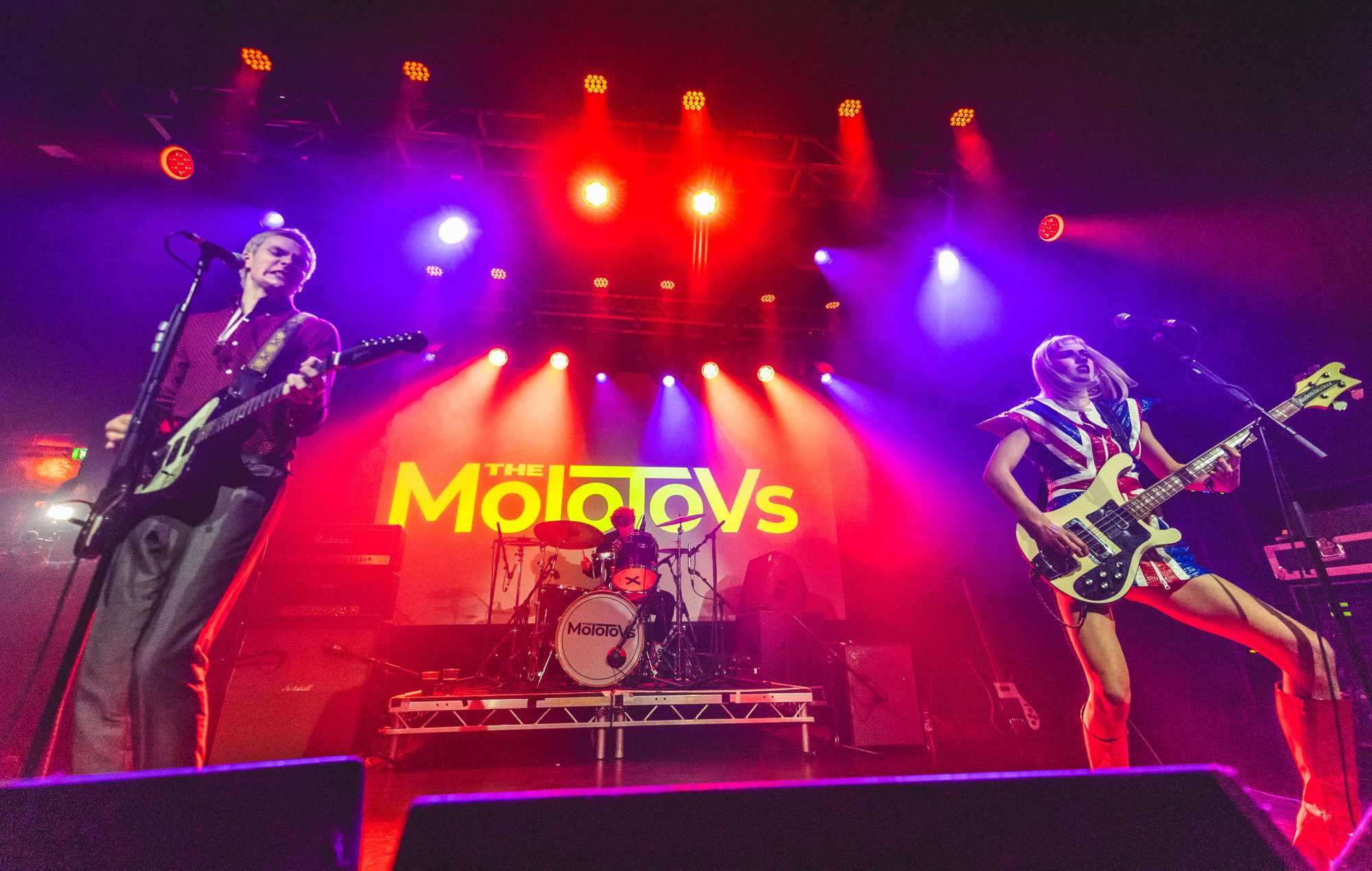
The Molotovs have spoken to NME about their debut album ‘Wasted On Youth’, their relentless approach to gigging, and why they think famous fans Blondie and Sex Pistols “see a bit of themselves in us”.
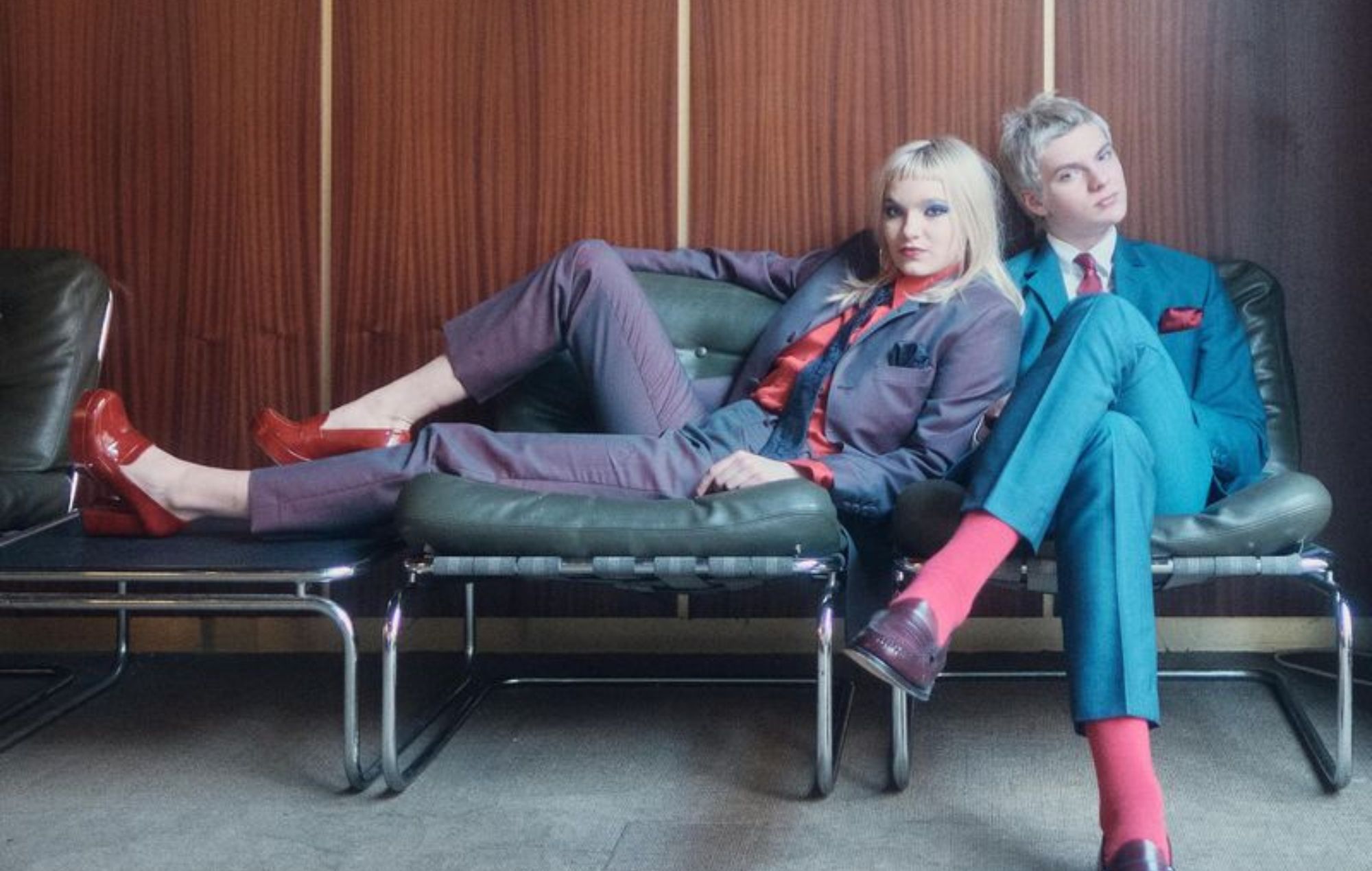
Comprising the teenage Cartlidge siblings Issey (bass/vocals) and Mathew (guitar/vocals) , the London mod duo have just released their debut ‘Wasted On Youth’. A collection of breakneck rock ‘n’ roll and uncompromising Brit-punk, the album arrives amidst a significant wave of hype for the band, who topped the UK physical singles chart twice in 2025 before selling out Camden’s 1,500-capacity Electric Ballroom.
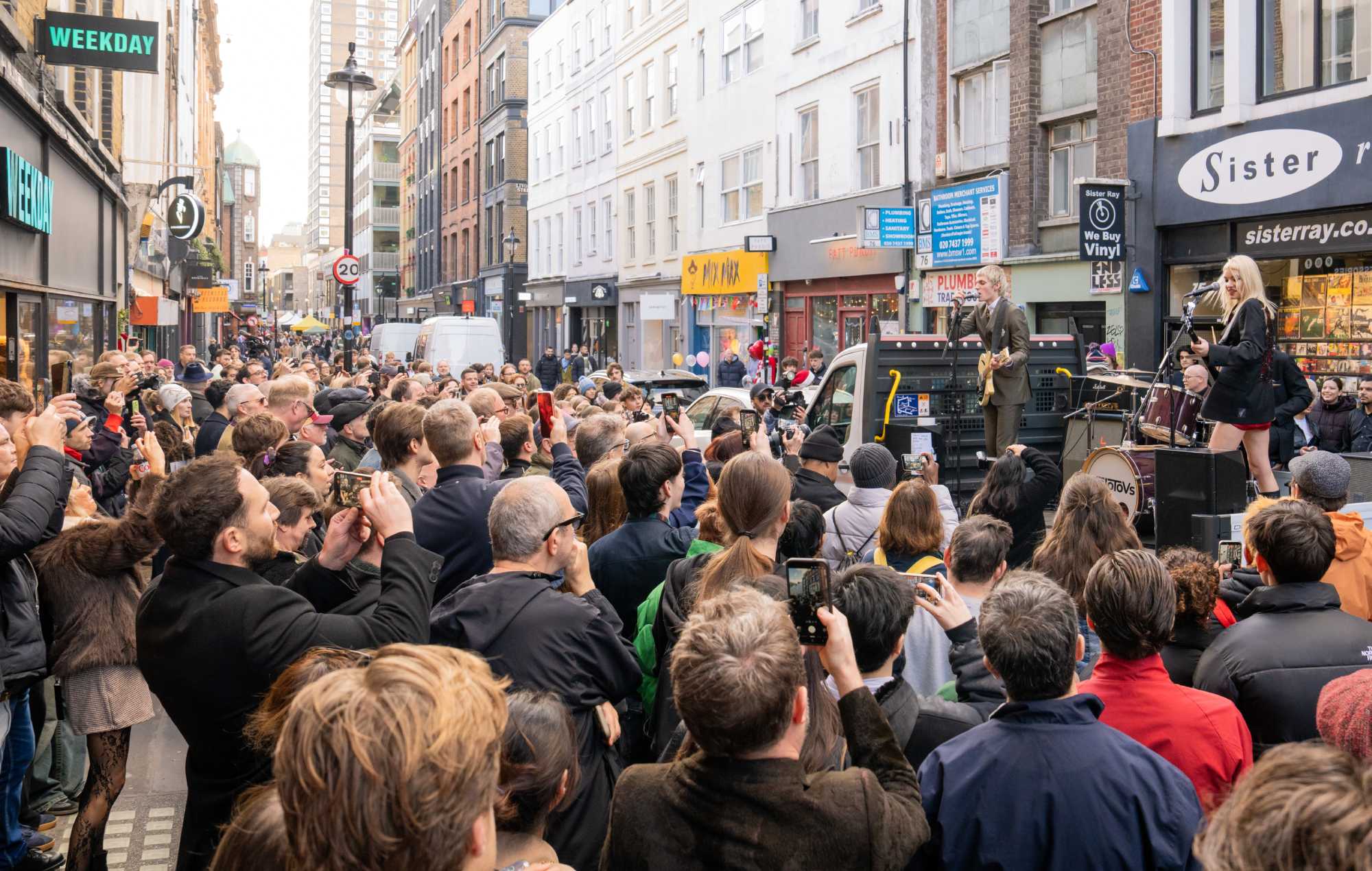
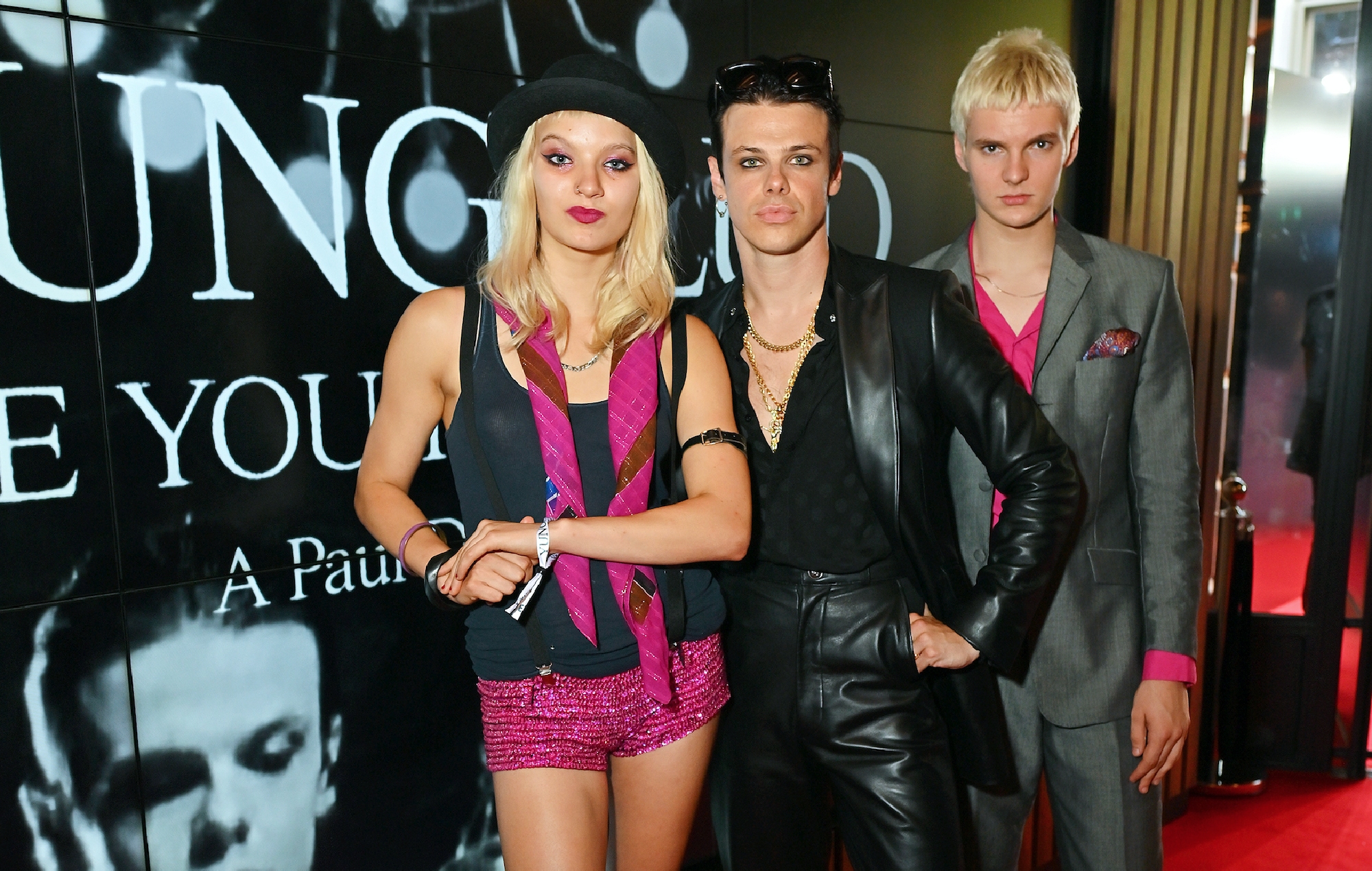
Counting Green Day, The Libertines and Yungblud among their fans – the latter has invited them to open his UK arena tour this April – the duo have played over 600 gigs in the past six years. From busking to weddings and grassroots venues all over the UK, The Molotovs have primarily built their fanbase through word-of-mouth buzz. Debut single ‘More More More’ arrived in March 2025, three days before they supported Sex Pistols with Frank Carter at the Royal Albert Hall.
[embedded content]
Last week, Issey was the cover star of Music Venue Trust’s annual report for 2025, which revealed over half of UK grassroots venues made no profit and the loss of over 6,000 jobs last year. The duo recently donated proceeds from their December show at Bush Hall to the MVT, while they are currently on an 18-date UK tour of independent venues in the lead-up to the album.
Speaking to NME before performing at The Sugarmill in Stoke, Mathew said that every night on this tour has had “a really good energy to it”.
Recommended
“We’ve become ambassadors for Music Venue Trust,” added Issey. “We’ve been gigging [in these spaces] for six years, and it’s become this intrinsic part of what The Molotovs are. It’s the bread and butter of what we do.”
Although The Molotovs have had their biggest moments in their hometown of London, the band told NME that they feel passionate about visiting towns on this leg that aren’t on the primary touring circuit. “If we were to be true to what we believe in and stand for, you go to all the small places like Blackpool, Stoke and Aylesbury,” said Mathew.
Check out our full interview below, where The Molotovs discussed the impetus behind ‘Wasted On Youth’, the ‘industry plant’ allegations they’ve faced, and their upcoming tour dates with Yungblud.
NME: Happy Independent Venue Week, Issey and Mathew. You’ve led by example throughout the month of January. Why is it important to keep the spotlight on grassroots venues beyond these seven days?
Mathew Cartlidge: “The bigger bands are the bands that don’t really play independent venues all the time. If they go and play them, then it’s making a bigger statement, whereas a band at our level or lower, it’s what we do all the time.”
Issey Cartlidge: “We started these Youth Explosion gigs a couple years back, which were all-ages, super accessible, £3 tickets, because we wanted to bring young people back into live music venues. How are you going to create a new generation of guitar bands if none of them are exposed to it? This developed into a residency at Bush Hall, which then ended up [becoming] gigs with all profits going back to the venue, because it was facing closure. We’ve always tried very hard to spotlight independent venues throughout the year.”
Considering you’ve been so determined to play gigs, why did you refrain from releasing music for so long?
Issey: “We didn’t want to release music to this black hole of DSPs – we watched our peers do that. We wanted to build true connections with people, seeing them at gigs with a sweat beading on their face.”
Mathew: “So many bands release a single to nobody. In six years of gigging, we’ve built a fanbase, and the single went to [physical] Number One. It goes to show that if you hold off releasing music, I guess it means more to people.”
Issey: “People are desperate – now more than ever – for those real connections, instead of everything being substituted to a digital sphere where art has become increasingly devalued because of how disposable it is. We want to bring back that kind of meaning to music.”
As you say, Issey, there seems to be a growing appetite for real, in-person connection and digital detoxes. Why do you think the success story of your approach has led to such a torrent of online anger and ‘industry plant’ accusations?
Mathew: “The only conclusion that their small minds can bring themselves to is that [we’re a] bunch of nepo babies. Yeah, we’ve exploded, and we’re new – in their minds – because they don’t see the slog for the past six years, all the shite gigs in pubs. Of course they haven’t seen that. It’s a problem when they do spout that rubbish online.
“It’s really sad that that’s what they decide to do with their time. I used to do a bit of that when I was younger, and I realised that’s not the way forward. With the songs, I was trying to stoke unity within young people. I thought, ‘Well, if I’m being a keyboard warrior online, then I’m the biggest hypocrite on earth,’ you know?”
Issey: “[There are] a load of bands that come out, seemingly from nowhere, because everything’s now championed online. It seems like, ‘Oh, they just popped on to my algorithm all of a sudden, and they’re doing national press?’ But obviously there’s so much between that, and we’ve got the proof to back it up.”
Does album opener ‘Get A Life’ embody the way you respond to the detractors?
Mathew: “It’s an anti-hate song… spend your time doing something else.”
Issey: “It’s for people who get wrapped up in these petty trifles. We’re going to be in our own echo chamber and go our own way.”
Mathew: “But then it’s also got that slightly aggressive nature to it. We’ll show you – not that we have to – but you’ll fucking see.”
What did you want ‘Wasted On Youth’ to represent?
Mathew: “The album is a bit of a youth manifesto. An attitude of the youth, and it’s trying to inspire young people to change their environment. I can only write about what I see in my environment. I can’t write about Mars like David Bowie. I’m not that imaginative yet, or maybe the drugs haven’t come yet.
“On tour, I obviously go to the big cities and [also] the rural places and seaside towns – Blackpool, Skegness, all the rest of it. A lot of these places have been neglected, and that’s a real shame. But as much as it’s up to governments to sort that out, it’s also up to people to restore hope. Every generation thinks the one coming after them is doomed, and we’ve got to prove them wrong. We can make change, and you’ve got to start locally with your environment. If there’s not any hope, there’s no chance.”
Does that explain the lasting message of optimism behind the closing track ‘Today’s Gonna Be Our Day’?
Mathew: “That was the whole intention. ‘Get A Life’ could be interpreted as quite hateful – even though it’s completely the opposite – but ‘Today’s Gonna Be Our Day’ is overly optimistic. It’s an inspiring song. You want to get out of your chair and actually do something.”
[embedded content]
Where do you get your hope from amidst the doom and gloom?
Mathew: “When I see young people being politically motivated, coming down to the gigs and really believing in something. When we played Electric Ballroom, we were surprised with how many young people actually knew the lyrics and were really buying into what we were saying. They weren’t ‘our fans’, we were their group. That’s really what I want to keep when the band progresses.”
Issey: “Online, they try to tell you that you’re so different from everyone else, spout more division and hate, make us a more intolerant society. But really, we’ve got so many more similarities than differences. Talking to people and socialising makes that so obvious.”
Mathew: “My dad saw The Jam a few times in 1982 when Thatcher was closing all the steelworks. My dad was from Scunthorpe, [one of] the biggest steel manufacturing towns in Europe. Seeing that Paul Weller was as frustrated as the fans in these rural towns – even though he’s a big pop star – that’s real unity. There’s something quite comforting when people share those frustrations.”
What is it about The Jam – and other acts from the ’60s through to the ’80s – that you resonate with so much, having not experienced those eras in real time?
Mathew: “I loved the aggression of it, The Jam, The Buzzcocks and the Pistols. The ethos of it and the madness around it. That’s why bands like the Pistols and Blondie have picked us up along the way and got us on support, because I think they see a bit of themselves in us, the attitude we’ve got when it comes to gigging.”
Issey: “There seems to be a real purity and rawness to music back then. People’s character and creativity was put straight into the music.”
Mathew: “Imagine telling Johnny Rotten to do social media content…”
Do you see that spirit running through many other contemporary acts?
Mathew: “Definitely The Cases, who supported us [in Blackpool]. Great lads, great songs, and they work hard. I get on with grafters because they don’t make excuses for themselves. The Courettes are a bit older, but they don’t stop gigging. Soaked, from Southend, they’re always gigging. That attitude – whenever something comes, you never turn it down. You’re never too good for a gig. We did birthday parties, street parties for children.”
You’re taking on UK arenas with Yungblud in April. What does it mean to open that tour?
Mathew: “He works fucking hard. We bumped into him at The Hawley Arms, and he’s really down to earth. Being that successful, you’ve got every opportunity to be a wanker, and he’s not. It’s good to see that there’s still that faith.”
Issey: “It’s also a testament to his efforts in how he’s pulled guitar music back into the mainstream. It’s become in vogue again. After Oasis came back, and Yungblud making it big, who knows what’s going to come next?”
The Molotovs’ debut album ‘Wasted On Youth’ is released January 30 via Marshall Records. Check out their full list of remaining UK tour dates below and visit here for tickets and more information.
JANUARY
31 – Brighton, Resident Music
FEBRUARY
1 – London, Rough Trade Denmark Street
2 – London, 100 Club
4 – Cardiff, HMV
5 – Liverpool, Jacaranda Records
APRIL
4 – Stockton, Stockton Calling
11 – Sheffield, Utilita Arena (supporting Yungblud)
12 – Liverpool, M&S Bank Arena (supporting Yungblud)
14 – Belfast, SSE Arena (supporting Yungblud)
15 – Dublin, 3Arena (supporting Yungblud)
17 – Leeds, First Direct Arena (supporting Yungblud)
18 – Cardiff, Utilita Arena (supporting Yungblud)
20 – Glasgow, OVO Hydro (supporting Yungblud)
21 – Newcastle, Utilita Arena (supporting Yungblud)
23 – Birmingham, Utilita Arena, Birmingham (supporting Yungblud)
24 – London, The O2 (supporting Yungblud)
25 – Manchester, AO Arena (supporting Yungblud)
MAY
22 – Catton Park, Bearded Theory Festival
JULY
11 – Plymouth, Sound Factory Festival
30 – Inverness, Belladrum Festival