On this day in Hip Hop history, 36 years ago, Ice Cube released his debut solo album, Amerikkka’s Most Wanted. Following the high-profile and often contentious breakup of N.W.A., this project’s unexpected commercial and critical success not only set the tone for his solo career but served as a definitive launching pad for his trajectory as a cultural icon.
Peaking at #19 on the Billboard 200 and achieving platinum certification within its release year, the album proved that Ice Cube could maintain the hardcore, uncompromising gangsta sound that defined his early work while evolving into a sophisticated storyteller. His lyrical approach forced the commercial music industry to confront narratives that were often ignored by mainstream audiences, painting a vivid, accurate picture of life in Compton.
Unlike his previous work with N.W.A., Amerikkka’s Most Wanted allowed Ice Cube to adopt a more theatrical delivery while remaining unflinchingly direct. From the title track to the final outro, it was clear that he had no intention of sugar-coating his message. The album introduced a violently righteous theme that highlighted a militant side of the consciousness movement prevalent in the early 1990s. By collaborating with Public Enemy’s legendary production team, The Bomb Squad, Cube successfully harnessed a high-energy, dense soundscape that perfectly complemented his aggressive flow.
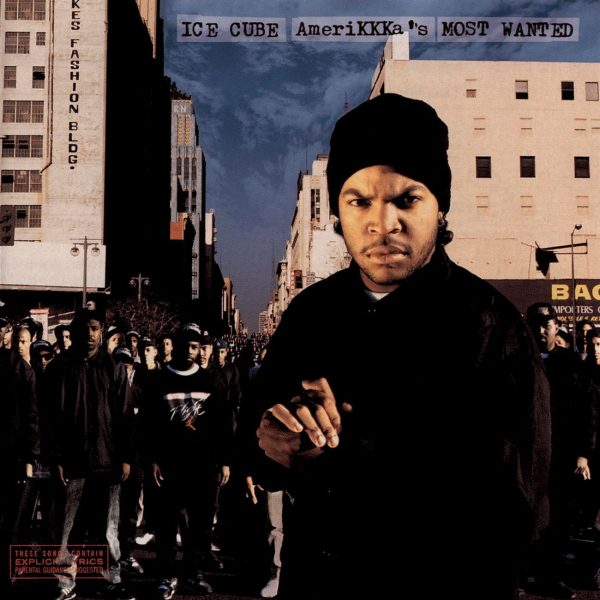
Critically, the project is held on a pedestal alongside the most respected works in Hip Hop history. It has consistently appeared on “Best of All Time” and “Best of the 1990s” lists across North America and Europe, earning perfect 5-out-of-5 ratings from publications such as The Source, Rolling Stone, Allmusic, and The Austin Chronicle.
Following this landmark release, Ice Cube evolved into the multi-hyphenate star he is today. Beyond his eight solo studio albums, he successfully transitioned into film as an actor, writer, and director, proving that his creative vision was never limited to the recording booth.